

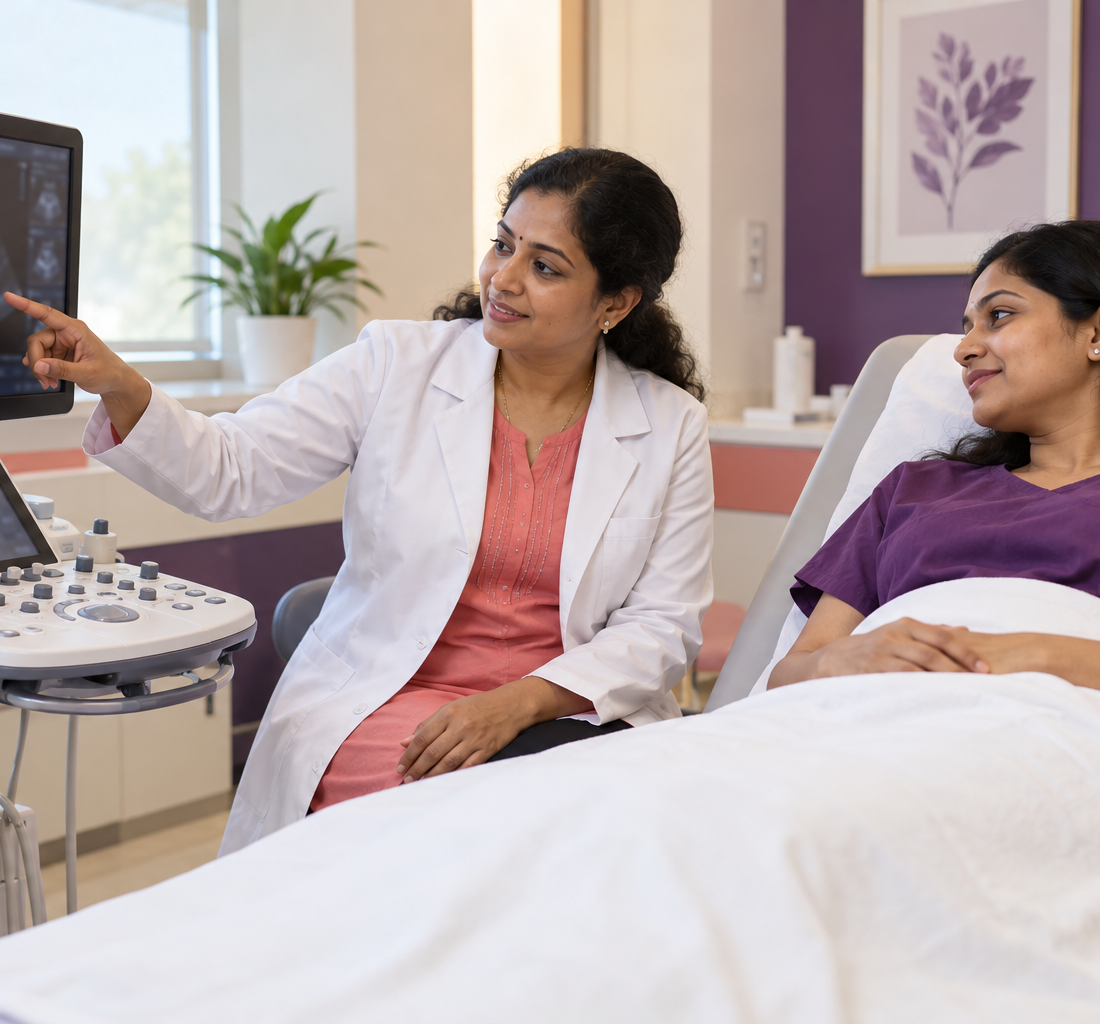
What is IUI?
How does IUI work?
At Parampara Fertility & Gynaec Centre in Chennai, we understand that every journey to parenthood is personal. We combine evidence-based fertility treatment with compassionate, individualised care, supporting couples through their choices. From fertility and gynaecology to pregnancy and maternity care, your health and emotional wellbeing guide our approach.

Stages of IUI Treatment
Understand each step of intrauterine insemination (IUI), with clear guidance from Parampara Fertility and Gynaec Centre.
Fertility Evaluation
Your specialist reviews your medical history and fertility tests to assess whether IUI is suitable.
What to expect
Assessment may include checking fallopian tube patency and semen analysis.
Ovulation Monitoring
Treatment is timed around ovulation. Medication may be recommended if you need help ovulating.
What to expect
Ultrasound scans or hormone tests help guide the timing of treatment.
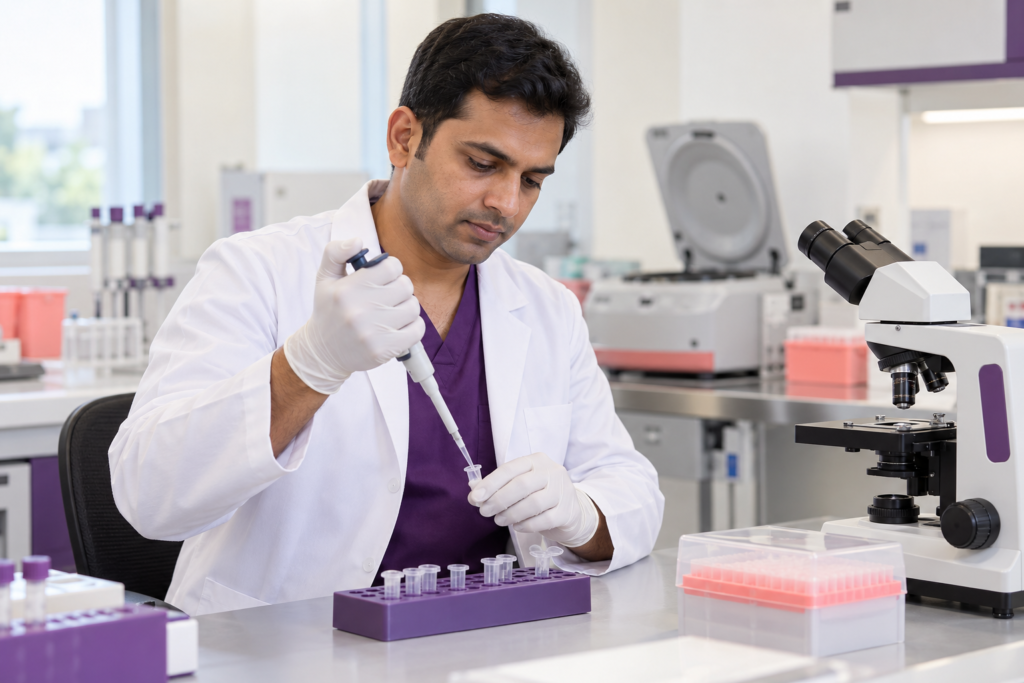
Sperm Preparation
The laboratory processes the sperm sample to prepare a concentrated sample for insemination.
What to expect
Your team explains sample collection and preparation before the procedure.
Insemination Procedure
Prepared sperm is placed into the uterus using a thin, flexible catheter.
What to expect
The procedure is usually brief. Some discomfort or mild cramping can occur.
Follow-Up & Pregnancy Test
Your team provides aftercare guidance and tells you when to take a pregnancy test.
What to expect
Follow-up helps your specialist discuss the result and next steps.
Your treatment plan and monitoring schedule will depend on your individual assessment.
Who is suitable for IUI Treatment?
IUI may be recommended for couples or individuals in the following situations:
- Mild male factor infertility, such as low sperm count or motility.
- Unexplained infertility where no clear cause is identified.
- Cervical factor infertility, such as cervical mucus abnormalities that hinder sperm passage.
Benefits of Having IUI
- A structured approach to conception with medical supervision and monitoring.
- Less invasive compared to procedures like IVF, reducing physical discomfort and recovery time.
- Lower cost compared to more complex fertility treatments, making it more accessible to couples seeking assistance in achieving pregnancy.
- Potential to use donor sperm for single women or same-sex couples, expanding reproductive options and family-building opportunities.

Personalised Care Starts with a Conversation for reliable nursing
Central Office:
Contact
+91 91766 44050
Schedule a Free Effective
Consultation

Have any question on your minds?
Frequently asked questions
Is IUI Painful?
IUI is generally well-tolerated and not considered painful. Some women might feel mild discomfort or cramping during or after the procedure, similar to menstrual cramps. This discomfort is usually brief and can be managed with over-the-counter pain relievers if necessary.
How successful is IUI on first try?
The success rate of Intrauterine Insemination (IUI) on the first try varies, typically ranging from 10% to 20% per cycle. Multiple factors, including age, infertility cause, and sperm quality, influence these outcomes. Success may require several cycles of treatment.
Is IUI better than IVF?
The choice between Intrauterine Insemination (IUI) and in vitro fertilization (IVF) depends on individual fertility factors. IUI is often tried first for mild infertility issues, while IVF is more suitable for severe infertility conditions, tubal factor infertility, or advanced maternal age. Consulting a fertility specialist helps determine the best treatment option.
How long does it take for IUI to get pregnant?
After an Intrauterine Insemination (IUI) procedure, pregnancy can occur within approximately two weeks if fertilization is successful. This period allows time for the fertilized egg to implant in the uterus and for pregnancy hormones to build up enough to be detected by a pregnancy test.