


What is Normal Delivery?
Preparing for Normal Delivery
Preparing for a normal delivery involves both mental and physical readiness, along with selecting the best hospital for normal delivery in Chennai. Consider the outcome, the competency of medical professionals, and pain relief options.
- Visiting a normal delivery hospital in Chennai ensures the baby’s well-being and that of the mother.
- Gentle exercises and prenatal yoga help build stamina and flexibility. They also prepare the body for labor.
- Relaxation and pre-birth education help relieve anxiety and prepare both mentally and physically for labor.
- Nutrient-rich foods keep the mother strong during birth and support breastfeeding.
- Clear communication with the best doctor for normal delivery in Chennai ensures the mother’s birth plan, including pain management and delivery preferences, is respected.
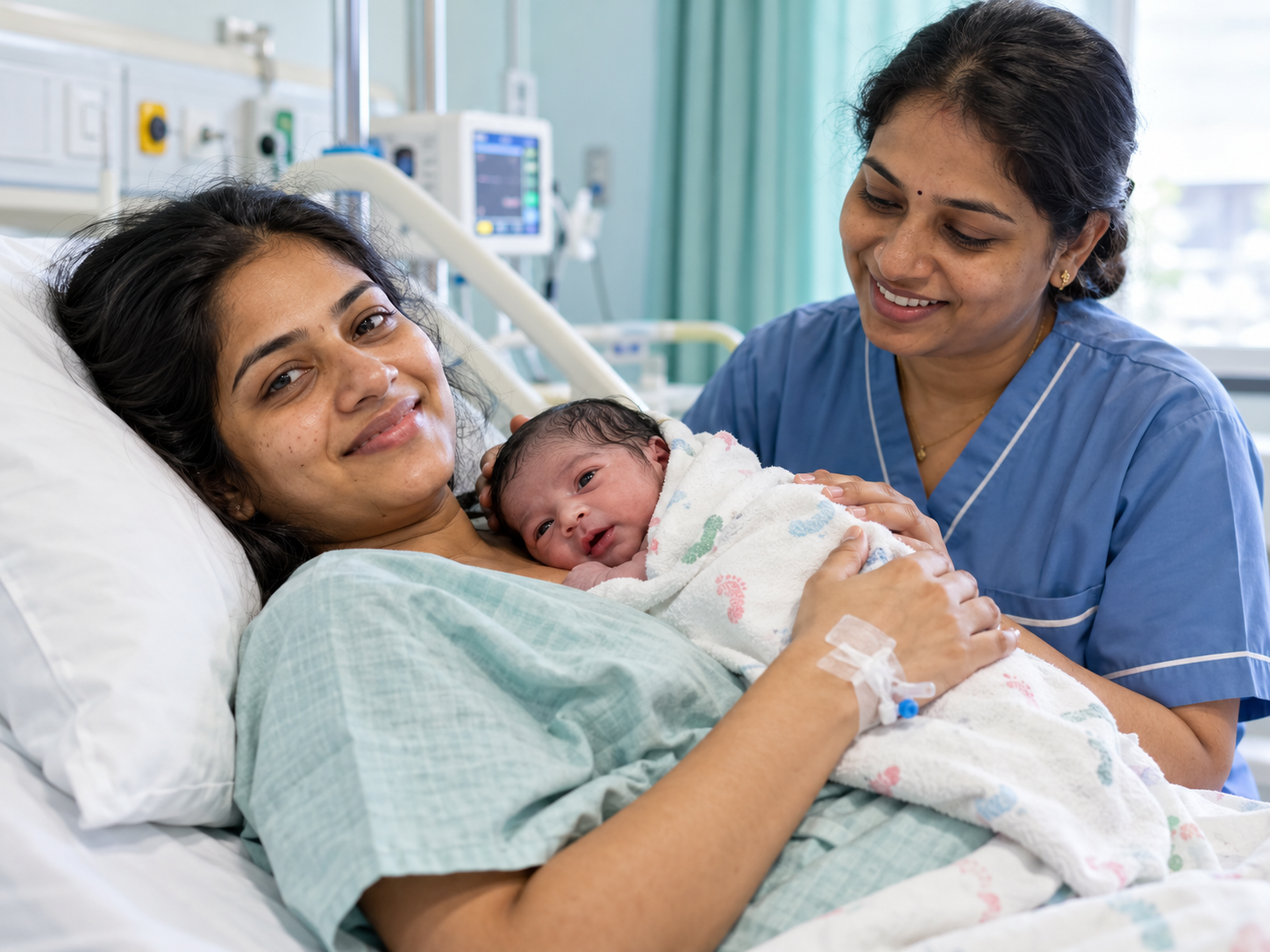
Stages of Normal Delivery
Labour and vaginal birth usually progress through three stages. Knowing what happens at each stage can help you feel more prepared for your baby’s arrival.
Early & Active Labour
Contractions help the cervix soften, thin and gradually open. The first stage ends when the cervix is fully dilated, usually to about 10 cm.
Know More
Your care team monitors you and your baby and discusses comfort measures and pain relief options.
Birth of Your Baby
The second stage begins when the cervix is fully dilated and continues until your baby is born. Your care team guides and supports you during pushing.
Know More
The team monitors progress and your baby’s wellbeing, adjusting the birth plan if needed.
Delivery of the Placenta
After your baby is born, the uterus continues contracting and the placenta is delivered. This completes the third stage of labour.
Know More
Your care team checks the placenta and monitors bleeding and your recovery.
Every labour is different. The duration and care needed vary, and your team will guide you according to your health, your baby’s wellbeing and how labour progresses.

Signs of Labor
Recognizing the signs of labor, such as frequent contractions, the bloody show, and water breaking, is crucial for timely childbirth preparation. Mothers should consult their doctor or midwife as soon as labor starts.
- Persistent lower back pain can be a sign of labor. Contractions often accompany this pain.
- Regular and increasing contractions are the first sign of labor. They indicate that the body is preparing for delivery.
- The amniotic sac rupture (water breaking) shows that labor is imminent. This requires immediate medical intervention.
- A small amount of blood-tinged mucus discharge, called the bloody show, indicates that labor may start soon. It happens as the cervix begins to dilate.
Possible Complications in Normal Delivery
While normal delivery is generally safe, complications can arise. Being aware of potential issues helps in prompt management. Key points are:
- Postpartum hemorrhage is a rare yet severe condition. It requires prompt medical attention from the best hospital for normal delivery in Chennai.
- Tears in the perineum can occur during delivery. They are usually treated with stitches after birth.
- Labor that lasts longer than usual can be exhausting for the mother. It may require medical intervention.

Personalised Care Starts with a Conversation for reliable nursing
Central Office:
Contact
+91 91766 44050
Schedule a Free Effective
Consultation

Frequently asked questions
Is normal delivery always possible?
Many women can have a normal delivery. Some may require a C-section for medical reasons.
How long does it take for one to recover from a normal delivery?
It generally takes 6-8 weeks; however, this varies for every lady.
What can help ensure a normal delivery?
Regular checkups, a healthy lifestyle, and remaining informed are vital to enhancing the likelihood of a normal delivery.